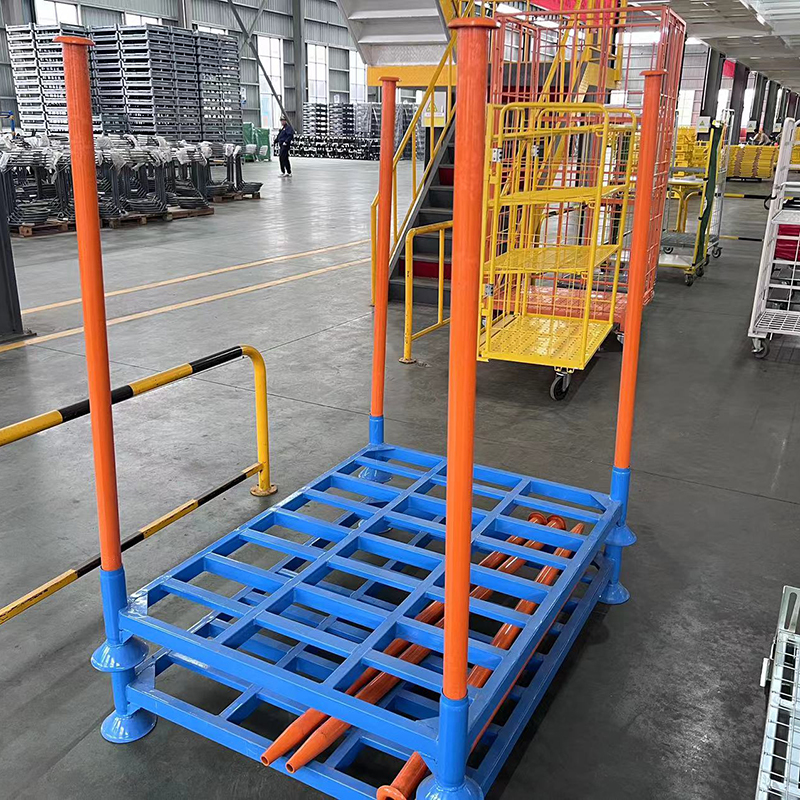
In the warehousing and logistics system, logistics racks are the core facilities supporting goods storage and turnover. They are by no means simple metal frames but comprehensive solutions that balance safety, efficiency, and flexibility. A high-quality logistics rack must take safety as the bottom line, space as the core, and efficiency as the goal, precisely meeting the actual needs of the warehousing scenario.
Safety is the primary prerequisite for high-quality logistics racks. They need to have stable load-bearing performance, not only meeting national load-bearing standards but also having a solid structural design: columns and beams are connected with double locks to prevent loosening due to handling vibrations; the bottom is equipped with fixing devices and non-slip foot pads to eliminate the risk of tipping. For special environments such as cold storage and chemical industry, hot-dip galvanized or stainless steel materials should be used to resist corrosion, ensuring long-term use strength and building a safety barrier for goods and operators.
Space utilization determines the core value of logistics racks. A good logistics rack can maximize the potential of warehousing space: high-level shelves can extend to vertical space, increasing storage capacity by more than 3 times; shuttle racks reduce channel occupation through track design, allowing warehouse utilization to exceed 80%. At the same time, the necessary layer distance adjustment function is indispensable. Through adjustable laminates to adapt to goods of different heights, it can be flexibly adjusted according to the height of goods, avoiding the space waste of "large racks storing small items", especially suitable for warehousing scenarios with complex SKUs such as e-commerce, improving space use efficiency.
Adaptability and flexibility are the keys to improving logistics efficiency. High-quality logistics racks need to be compatible with modern equipment such as AGV robots and forklifts to realize man-machine collaborative operations; modular design supports later expansion, and adding or reducing components can adapt to scale growth. In addition, detailed designs such as protective strips on the edges of laminates and anti-collision sleeves on columns can reduce operational losses, improve safety, indirectly speed up the turnover of goods, and help improve overall efficiency.