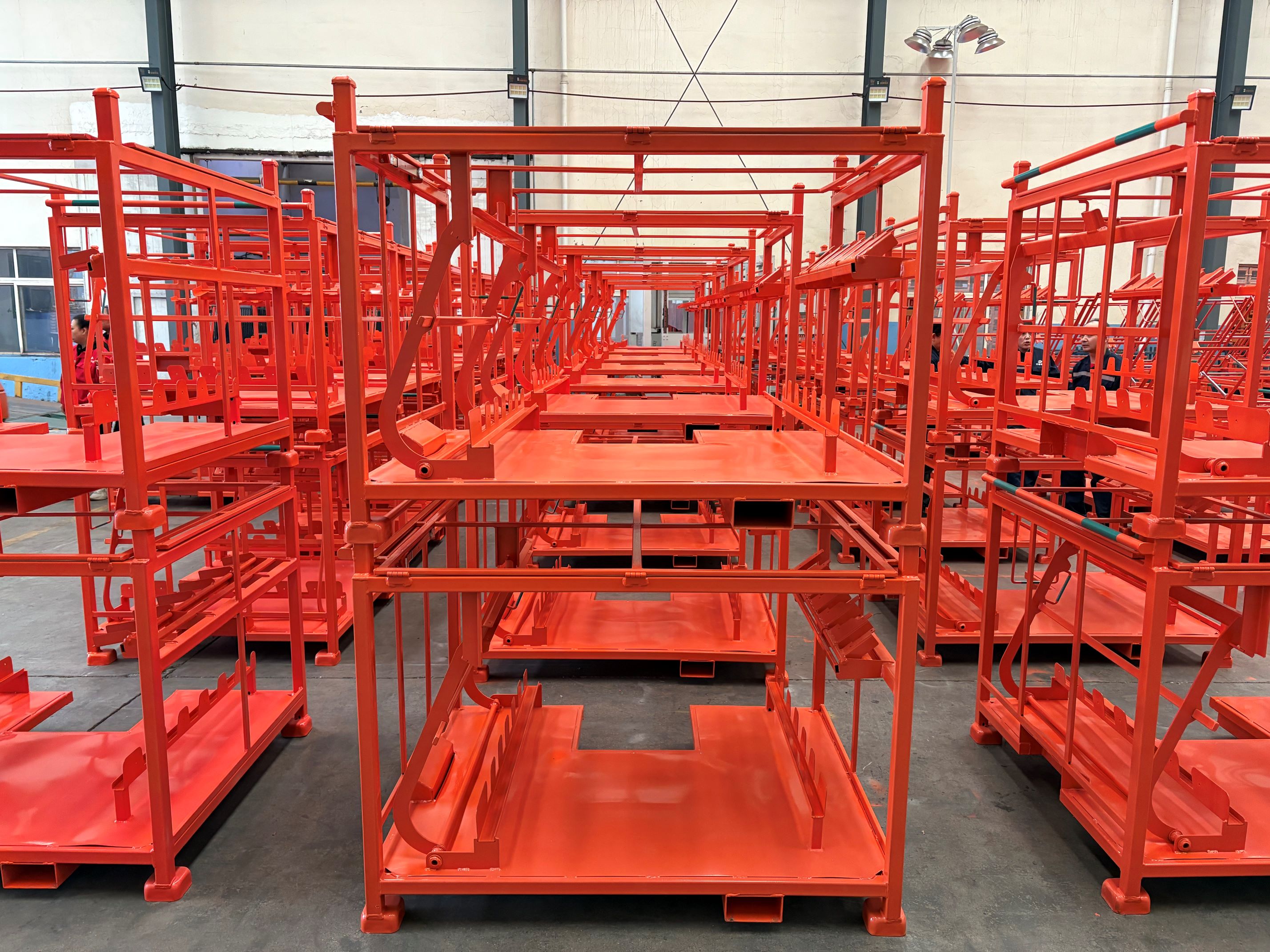
In the modern logistics and transportation system, racks serve as core tools for cargo bearing and protection, and their selection directly affects transportation efficiency and cargo safety. The selection of transport logistics racks should be based on actual needs to establish a multi-dimensional evaluation system, avoiding resource waste or safety hazards caused by blind purchasing.
Accurately matching the transportation scenario is the primary prerequisite. For long-distance road transportation, which needs to cope with bumpy road conditions, racks with anti-slip mats and fixed buckles can effectively prevent cargo displacement; for railway transportation, it is necessary to consider the size compatibility with containers to ensure that the stacked racks meet the height and width limits; for air transportation, which is sensitive to weight, it is necessary to select lightweight aluminum alloy materials while meeting the load-bearing requirements to reduce the total transportation cost.
Load-bearing capacity and cargo characteristics are core indicators. For heavy machinery parts, thickened cold-rolled steel multi-layer fixed racks are required, with a 20% safety margin reserved for the load-bearing capacity of the laminates; for small e-commerce items, combined racks with adjustable layer spacing are suitable, and partition boards can be matched to improve space utilization; for the transportation of fragile goods, attention should be paid to the buffer design, such as adding rubber anti-collision strips or built-in shock-absorbing cotton.
Structural stability and durability cannot be ignored. High-quality racks should be reinforced with triangular mechanical side supports, and equipped with anti-slip foot pads or brakeable universal wheels at the bottom for easy loading and unloading. In terms of materials, cold-rolled steel has better rust resistance than ordinary steel, making it suitable for humid environments; racks treated with galvanizing process can extend the service life of outdoor transportation and reduce maintenance costs.
flexibility need to be considered in a coordinated manner. For short-term transportation, foldable racks are selected to save storage space when not in use; for long-term fixed routes, customized racks are recommended to optimize the structure and reduce the unit load-bearing cost. At the same time, it is necessary to confirm that the racks meet the national logistics safety standards to avoid accidents caused by substandard materials.
In conclusion, the selection needs to achieve a four-fold balance of "scenario adaptation, accurate load-bearing, reliable structure, and cost control" so that the racks can give full play to their supporting role and improve the overall transportation efficiency.