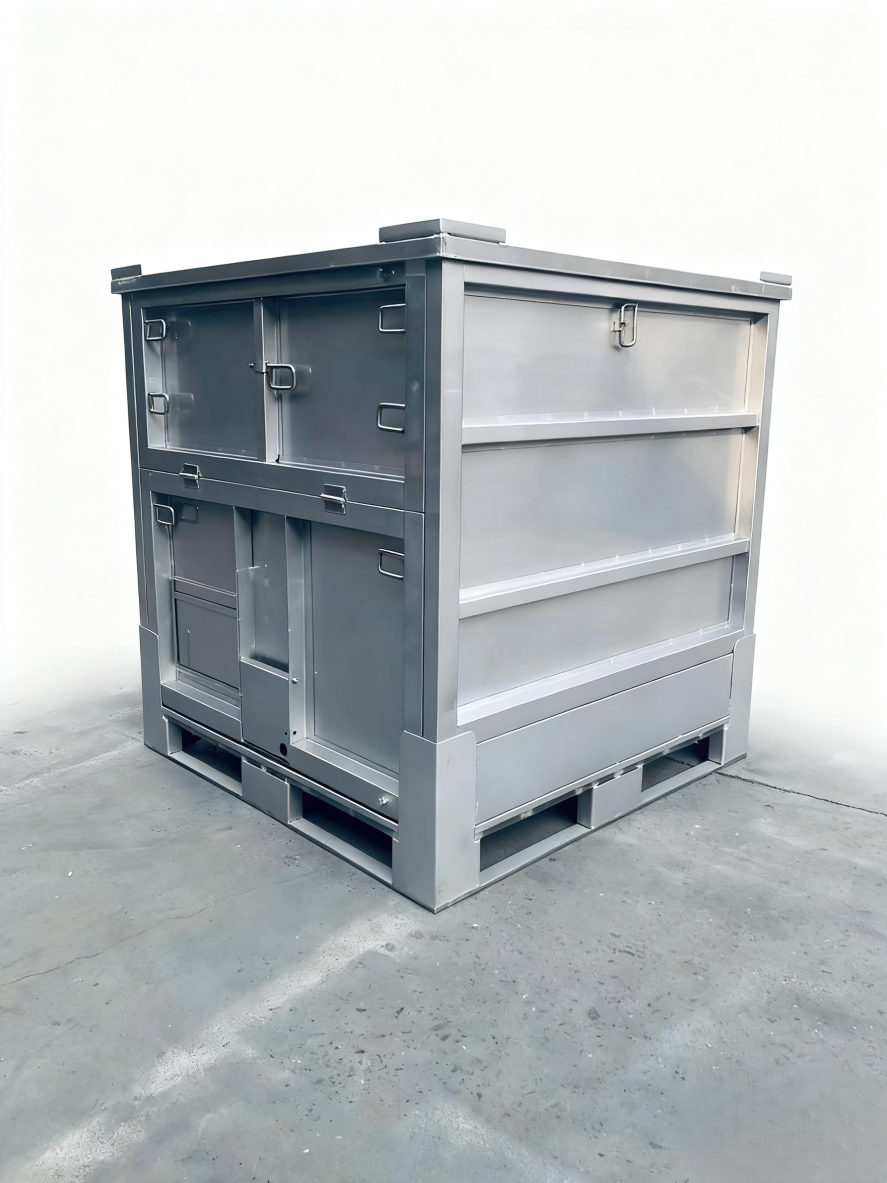
As the "mobile shelves" in the field of logistics and warehousing, the classification of turnover box has always been based on usage scenarios, material characteristics, and functional requirements. Different types of turnover boxes play unique roles in various links of the supply chain, becoming key carriers for improving circulation efficiency.
From the material perspective, plastic turnover boxes are currently the most widely used category. These folding storage boxes are made of polyethylene (PE) or polypropylene (PP), featuring advantages such as impact resistance, light weight, and easy cleaning. They can meet the hygiene standards of the food industry and also adapt to the anti-scratch needs of electronic components, commonly used in scenarios like e-commerce sorting and fresh food distribution. In contrast, metal turnover box and turnover iron box mainly made of steel or aluminum alloy, with a load-bearing capacity of up to several hundred kilograms and strong deformation resistance. They are mostly used for long-distance transportation of auto parts and heavy machinery accessories. Although they are relatively heavy, their foldable design effectively reduces the storage cost when empty boxes are returned.
Different types of turnover boxes are actually the product of the combination of logistics needs and material technology. With the development of intelligent warehousing, intelligent turnover boxes with positioning and temperature-humidity monitoring functions have gradually emerged. In the future, the classification of turnover boxes will be more in line with the digital and green industry needs, continuously empowering the improvement of supply chain efficiency.