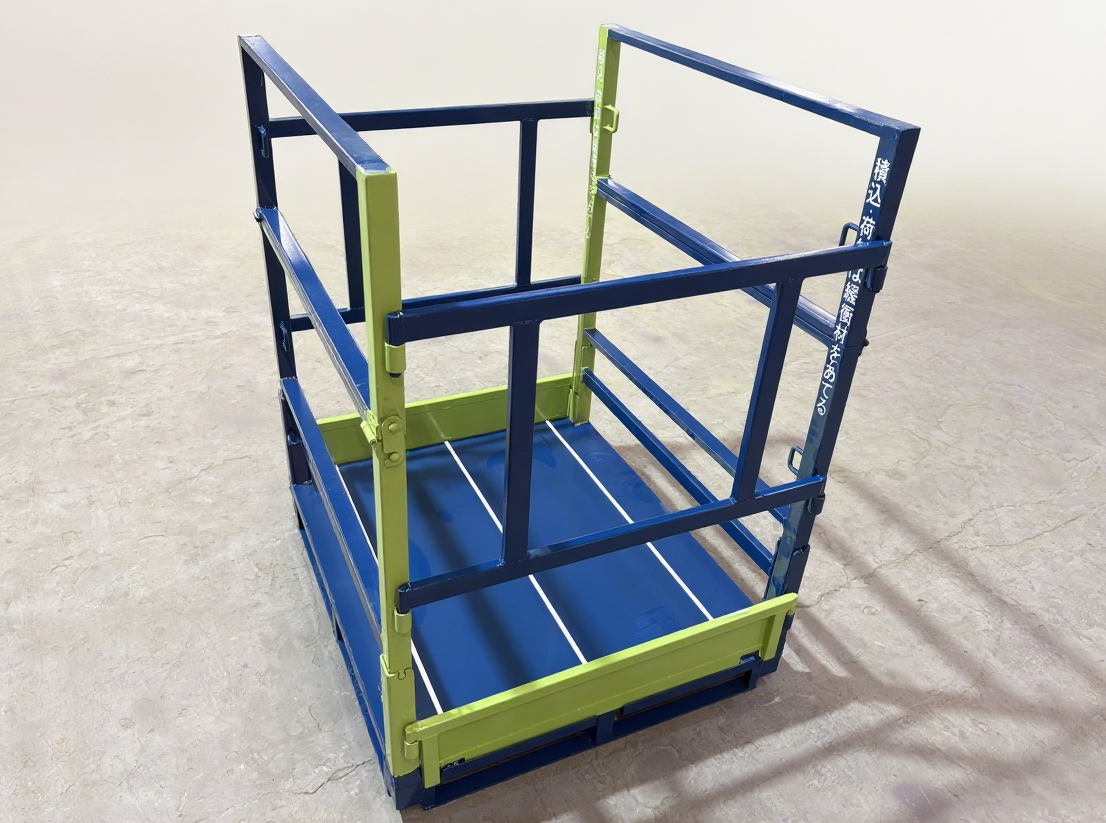
In the modern logistics system, transport racks are the "invisible backbone" that supports the flow of goods. Although they do not directly participate in commodity transactions, they determine transportation efficiency and cargo safety. From factory workshops to warehouses, from freight terminals to distribution stations, they carry various materials in diverse forms and have become indispensable core equipment in the logistics chain. Iron pallet is also a type of transport rack.
The types of transport racks are precisely adapted to the characteristics of the goods. Heavy-duty industrial equipment can use heavy duty pallet racking, which disperse weight through reinforced beams and non-slip bottom plates to avoid structural deformation caused by bumps during transportation; electronic components use layered transportation storage racks with anti-static partitions, which not only ensure space utilization but also isolate electrostatic damage; in the transportation of fresh products, aluminum alloy racks with ventilation holes work in conjunction with cold chain compartments to maintain a constant temperature environment while ensuring air circulation. This differentiated design allows each type of goods to have an exclusive "vehicle".
Reasonable structural design is the core competitiveness of transport racks. Detachable racks, through modular components, realize folding and storage when empty racks return, saving more than 70% of storage space compared with fixed structures. Mobile racks with rollers simplify the loading and unloading process in the warehouse, and when used with forklifts, can significantly reduce labor costs. In addition, precise size calibration can maximize the use of transport tool space. For example, container-specific racks can achieve "full load and go", reducing resource waste caused by transportation gaps.
The maintenance and protection of transport racks are also crucial. Regular inspection of the welding joints of steel racks and spraying of anti-rust coatings can extend their service life. When transporting fragile items, laying buffer pads on the rack laminates and adding fixed buckles can control the damage rate below 0.1%. Nowadays, intelligent technology is empowering them. Some high-end racks are equipped with weight sensors and positioning modules, which can feedback load conditions and location information in real-time, making logistics management more accurate and efficient.
As the basic equipment of the logistics chain, the iteration of transport racks has always kept up with the pace of industrial upgrading. From single carrying to intelligent management and control, its evolutionary path is a vivid epitome of the transformation of modern logistics towards efficiency, safety, and intelligence.