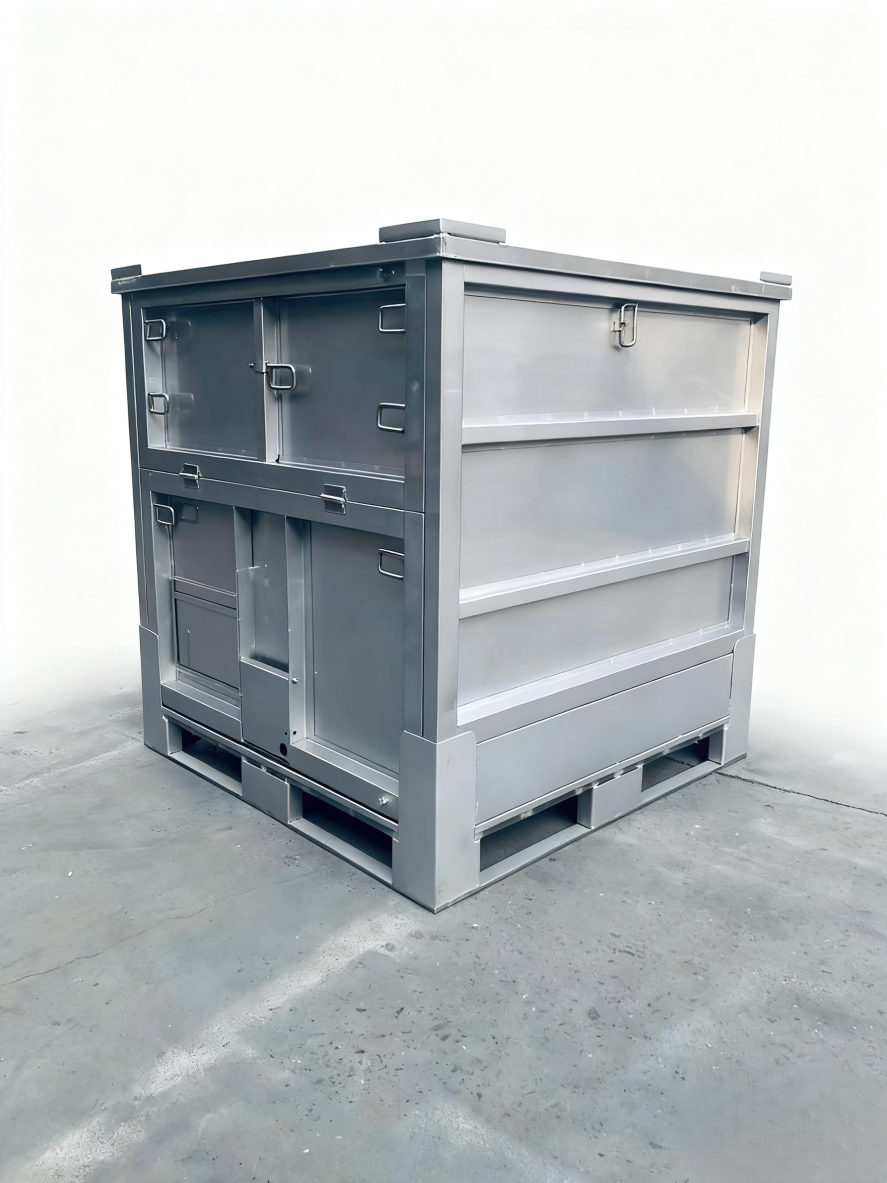
In today's world where global supply chains are becoming increasingly complex and the frequency of logistics transportation is constantly rising, packaging methods are exerting an increasingly profound impact on enterprises' operating costs, supply chain efficiency, and environmental responsibilities. For a long time, disposable packaging has been widely adopted due to its convenience in use and low initial costs. However, with the tightening of environmental regulations, increasing cost pressures on enterprises, and the popularization of the concept of green supply chains, the shortcomings of traditional disposable packaging have become increasingly prominent. As an alternative, recyclable turnover box is gradually entering the logistics systems of enterprises, emerging as a new choice that balances economic benefits and sustainable development.
Disposable packaging is usually made of wood, cardboard, or plastic. Although the procurement cost is low, there are various problems in actual use. Firstly, its safety and durability are limited. It is prone to damage during long-distance transportation, when carrying heavy goods, or in complex environments, which increases the costs of cargo damage and compensation. Secondly, disposable packaging has a low reuse rate. Disassembling, recycling, or directly discarding it will bring additional processing costs and generate a large amount of solid waste, which does not meet the current requirements of green production. For enterprises engaged in cross-regional and multi-round turnover, the investment and consumption of disposable packaging will form a long-term hidden burden. In contrast, the advantages of recyclable turnover iron box is obvious. Metal turnover box is made of high-strength steel or aluminum alloy materials, with excellent durability and protective performance. They can maintain stable structural strength and protective effect in high-frequency and long-distance logistics transportation, significantly reducing the cargo damage rate. Due to their reusable nature, the equipment can still have use value after hundreds of cycles, and in the long run, the cost per use is greatly reduced. At the same time, through standardized design, recyclable metal boxes can efficiently connect with various links such as warehousing, transportation, and automated loading and unloading, improving the overall logistics turnover speed and space utilization rate.