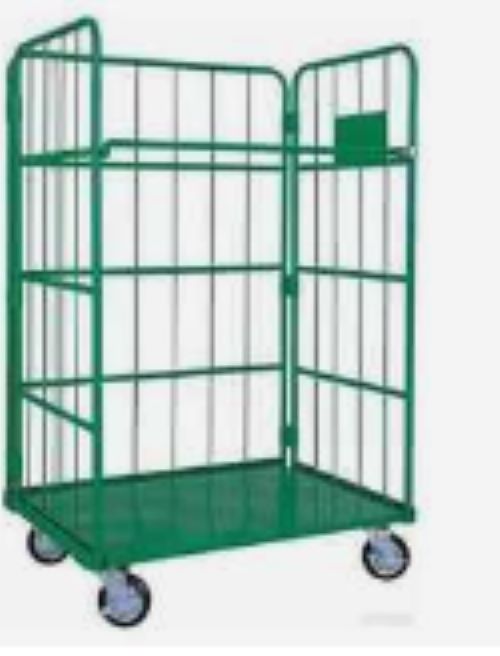
A logistics cart is not limited to use in the logistics industry. Its core functions—convenient transportation, classified storage, and stable load-bearing—are highly versatile, and it has long been integrated into various non-logistics industrial scenarios such as commercial retail, healthcare, household life, and agricultural production, serving as a practical tool to improve efficiency in diverse settings. Below is a detailed breakdown of its multi-scenario applications by category:
1.Supermarkets/Convenience Stores: Replenishment and Inventory Management
Replenishing goods from warehouses to shelves: Layered logistics carts are used to transport bulk snacks, beverages, and daily necessities. The side panels prevent goods from falling, making transportation more labor-saving than using shopping baskets or cartons—this is especially suitable for large-scale supermarkets (e.g., Walmart, Yonghui) that require extensive restocking.
Supporting promotional activities: During sales promotions, when product demand surges, carts are used to temporarily store promotional items (e.g., grain, oil, tissues), allowing staff to restock at any time. They can also be directly used as "mobile promotion counters" to reduce pressure on fixed shelves.
2.Clothing Stores/Department Stores: Goods Organization and Display
Transporting off-season clothing: Off-season clothes are moved from warehouses to storage rooms, or in-season new products are transported from warehouses to fitting rooms/shelves. The cart’s layered design enables classification by size and style, preventing clothes from wrinkling or being mixed up.
Handling returns and exchanges: Daily returns and exchanges in stores are collected in carts and uniformly transported to the back office for verification and re-shelving—this is more efficient than transporting items scattered in shopping bags.
3.Fresh Markets/Fruit Stores: Ingredient Transportation
Fresh produce vendors use carts to transport fruits, vegetables, and meat from cold storage. The side panels prevent ingredients from falling, and some carts with partitions can separate different categories (e.g., meat and vegetables) to avoid cross-contamination of odors.
"Bulk delivery" for customers: If customers purchase large quantities of fresh produce (e.g., whole crates of fruits, multiple portions of meat), carts can be used to transport goods to the customer’s vehicle, enhancing the service experience.